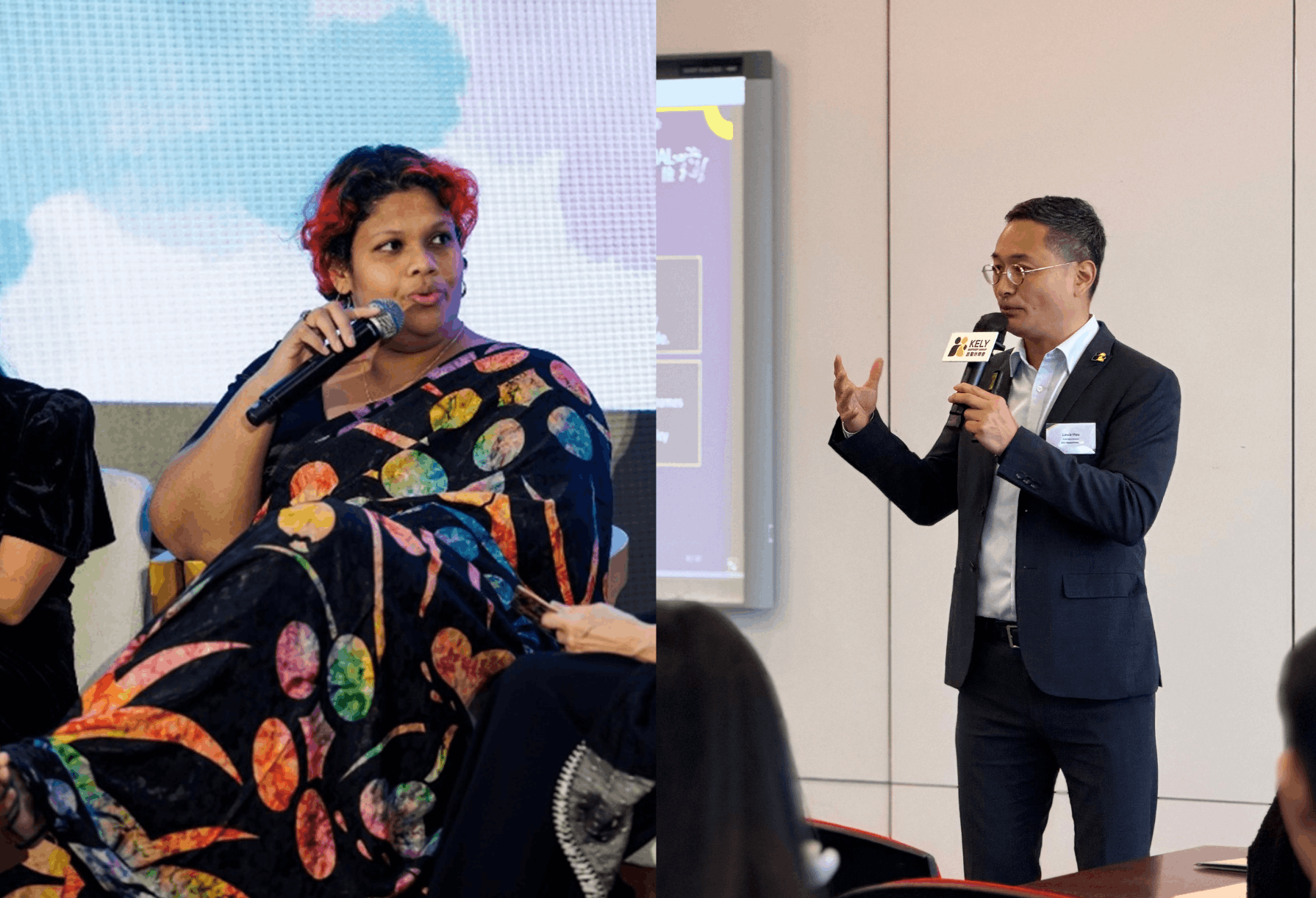
Manisha, Executive Director at HELP For Domestic Workers and Louis, Executive Director at KELY Support Group both took SSILP (known as NGOLP at the time) in 2020, but the paths that brought them there could hardly have been more different. She came from law, rising through the ranks of a nonprofit that supports domestic workers. He came from twenty years of sales, bringing a commercial mindset into a social enterprise built around visual impairment. On paper, they belong to separate worlds. But when you listen to them talk about the work—the real challenges, the changes they are trying to make—you start to hear the same questions surfacing. How do you build an organization that truly serves people? How do you lead when the old rules stop working?
Neither claims to have found the answers. But both are finding their way, one decision at a time.
─────────────────────
On a Sunday morning in Central, the covered walkways fill with women sitting on sheets of cardboard, sharing food, braiding each other’s hair, talking on phones to families thousands of miles away. They are domestic workers—from the Philippines, from Indonesia, from Sri Lanka—and this is their one day off.
Manisha’s organization — HELP For Domestic Workers — exists for them.
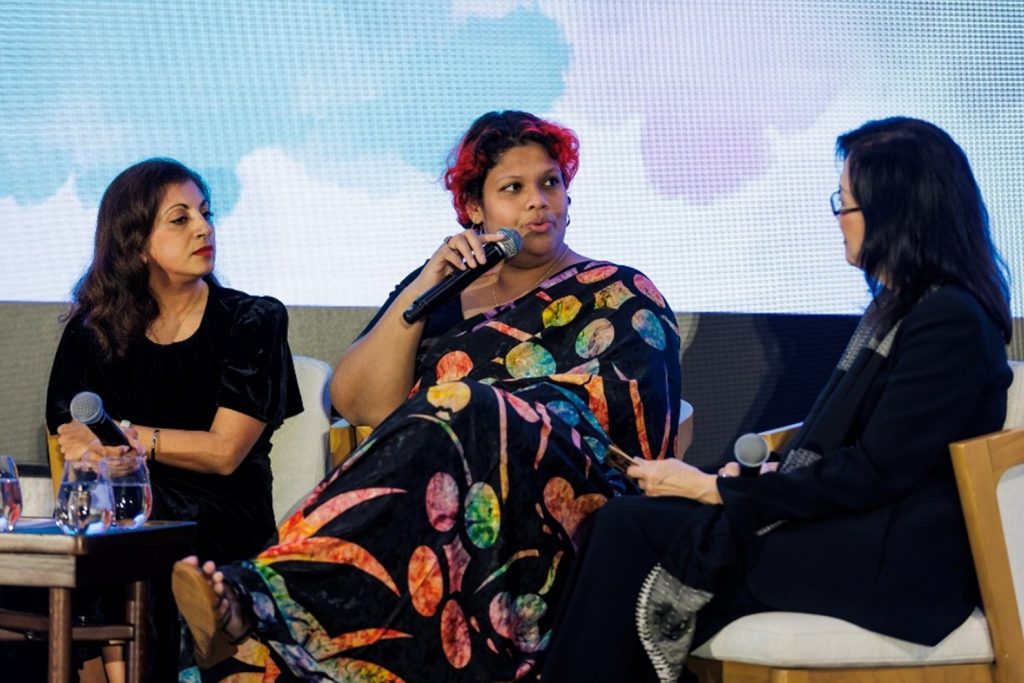
Manisha (center) at an event.
She came into this work through law rather than nonprofit training—a path more common in Hong Kong’s English-language nonprofit space than one might expect. “Many people I know in the English-speaking nonprofit space come from backgrounds in fields such as law, the humanities, or project management, or have transitioned from corporate careers and have not had formal training in nonprofit work”, Manisha says. At the time, she was Director of Case Management, but already operating at an executive level. Driven by the need for continuous learning on the job, she took the SSILP in 2020.
What she did not expect was how much the program would reshape her thinking about partnerships and positioning. In Hong Kong, she noticed the nonprofit world is divided along language lines. Primarily English-speaking organizations and Cantonese Speaking organizations rarely have an opportunity to mix. “If you go for English events, you see the same organizations and the same staff. If you go to Cantonese-speaking spaces, it’s the same.” SSILP was one of the only places where both sides came into the same room. That exposure—seeing how organizations working in elderly care, the environment, and other fields approached their work—changed how she saw her own.
One project exemplifies how that shift played out. In 2020, she pitched an employer-support and elder-care program at SSILP. She got feedback and refined it. The next year, a colleague pitched it again at SSILP. More feedback, more refinement. A third pitch the year after. “We almost used it as a market research opportunity,” she says. “Being realistic, only two out of thirty are going to win the funding. But it was a great opportunity to refine something we really wanted to innovate on.” By the fourth year, they had secured multi-year funding from a local family foundation—a funder they would never have reached through traditional channels. Today, the program serves not only domestic workers but also their employers, reframing domestic work as part of Hong Kong’s larger care economy.
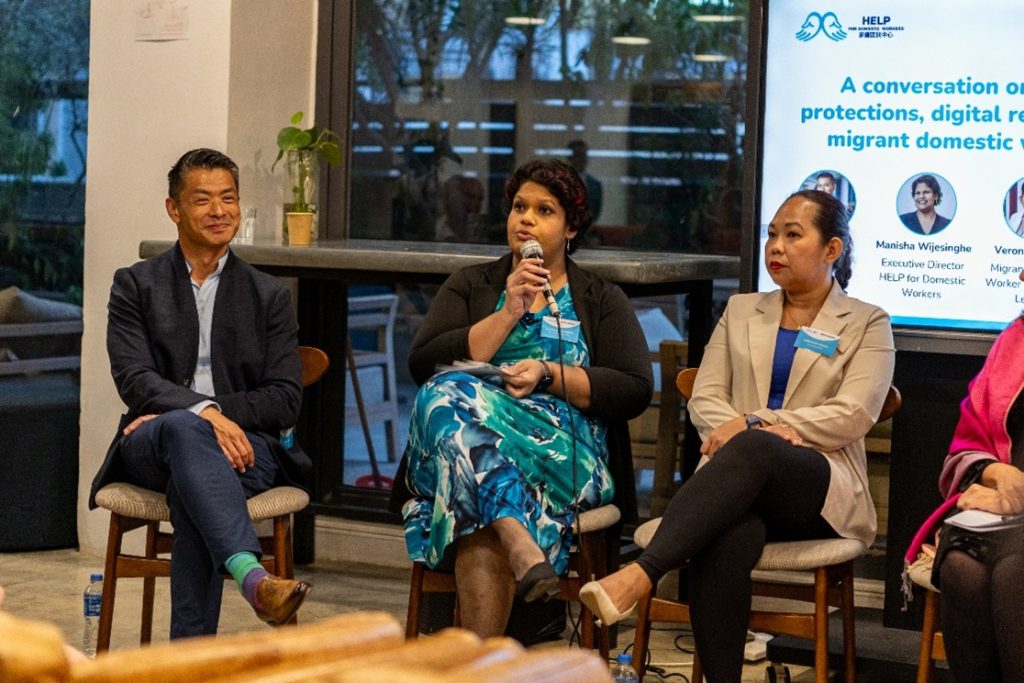
Manisha (center) at a HELP For Domestic Workers event.
“That project moved the narrative from ‘let’s help domestic workers’ to looking at the care economy — elderly care, childcare, special needs. If you’re looking at those issues, you have to look at domestic workers, because they are the ones providing that care.”
She has since applied this same strategic positioning to building a mental-health access model—partnering with university counselling programs and for-profit providers, triaging clients through her organization, and sending them to partners for treatment—and to a broader commitment to participatory design, where programs are co-created with the community rather than designed for them. “Hong Kong’s nonprofit space is rooted in the top-down charitable giving model” she says. “We are trying contribute to the efforts in shifting away from that approach.”
Manisha learned that true innovation in the nonprofit sector does not come from working harder in your own silo, but from seeing the whole map — elderly service groups, the family foundations outside traditional channels, the care economy that connects domestic workers to everyone else.
─────────────────────
Across the city, Louis was about to learn a different lesson — that a commercial toolkit, when dropped into a social enterprise, can feel like a foreign language. But with the right network, it can also save lives.
“I’m from the commercial sector” he says. “I was a salesman for more than twenty years.” When he joined Dialogue in the Dark, a social enterprise where visually impaired people lead sighted visitors through pitch-black rooms, he brought that mentality with him.
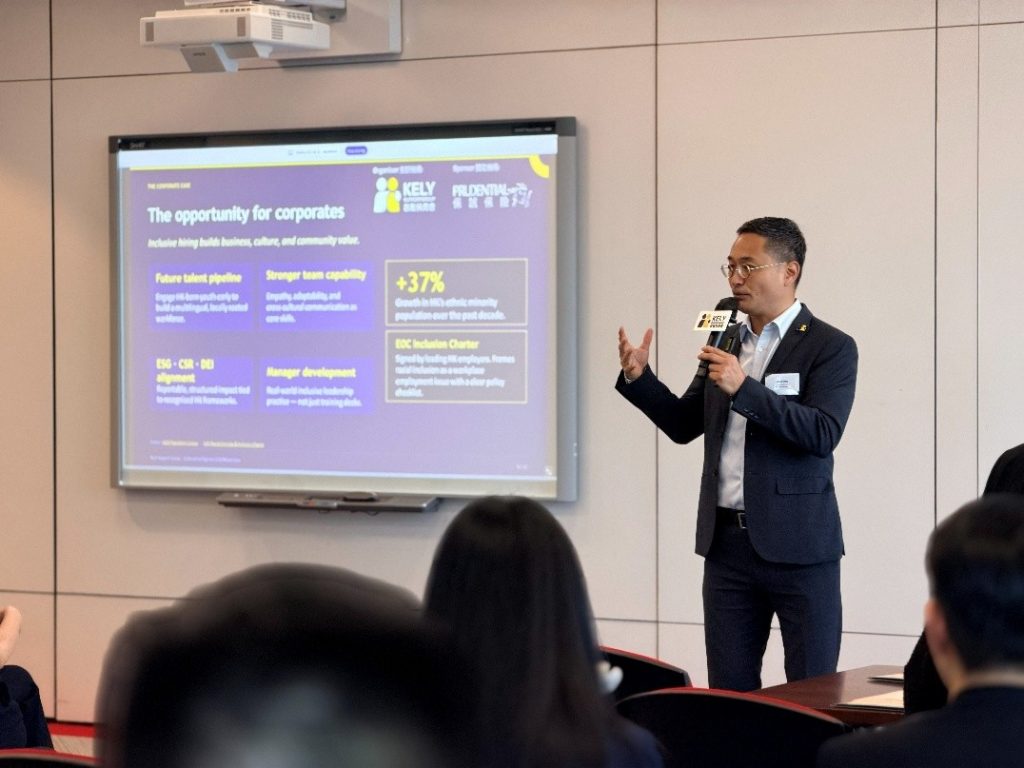
Louis giving a corporate sharing.
He took the same program in 2020, the same year as Manisha. “The management and marketing parts felt like a mini MBA to me,” he says. “I studied finance. The most useful part was the social impact section—I didn’t know much about that before.” What stayed with him most was the cohort. “The most amazing part of the program was getting to know NGO colleagues in senior positions. They are so creative, so capable. Quite a number of them are now my good friends.”
That network proved crucial sooner than expected.
In early 2020, Dialogue in the Dark had just opened a new center. The paint was fresh. The schedule was full. Then COVID hit, and the doors had to close. Monthly expenses ran over a million Hong Kong dollars. The board suggested liquidation.
“I always thought: should we go out and beg for money?” Louis recalls. “No way—because everybody was begging for money.”
Instead, his team looked at what they had. Their visually impaired colleagues had exceptional verbal and listening skills. A staff member came to him and said, “Louis, let’s do something. I don’t want to just sit here and have my salary cut.” He asked: “If you can’t be in the dark, what can you do? What are your differences?” They picked up the phones and started calling isolated elderly people at home—those who could not go to the park, could not see their families, had no one to talk to. They partnered with other NGOs serving the elderly. They trained their staff in basic counselling skills. No new technology. Just a creative use of existing capability. The project eventually reached more than twenty thousand seniors across Hong Kong.
“Creativity doesn’t have to be high-tech,” Louis says. “It’s about knowing your capabilities, being creative, and collaborating”. That collaboration did not happen by accident. It came directly from the SSILP network — senior NGO leaders he had met in the program who served the elderly. When his own doors closed, those connections opened others.
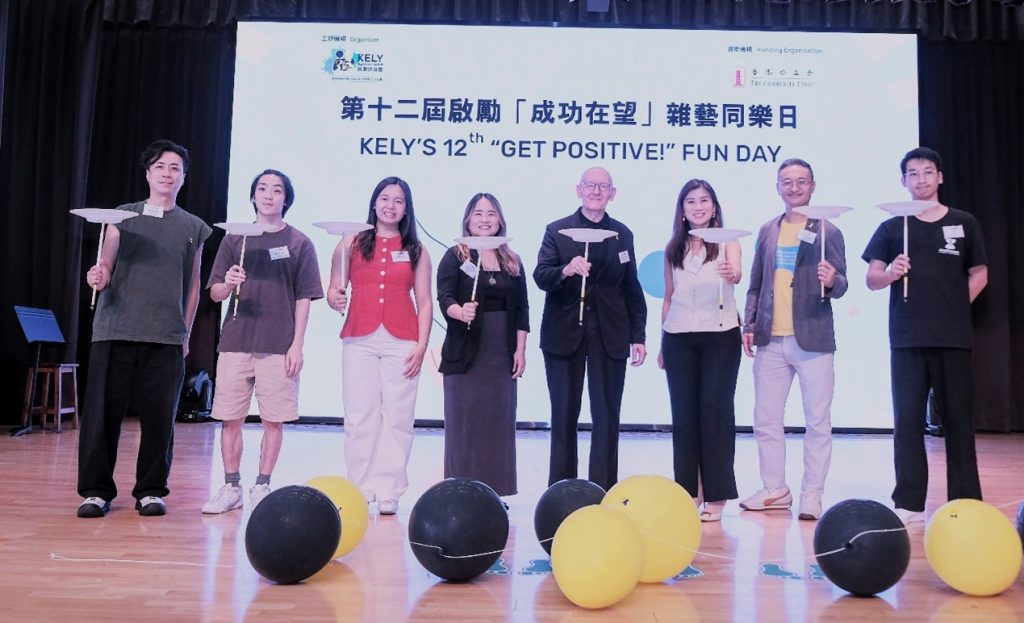
Louis (second from right) at KELY’s “Get Positive” Fun day.
The lessons from that experience stayed with him. When he later moved to KELY, a youth-focused NGO, he brought the same approach: look at what you have, find the gap, build something useful. He is pushing to shift the organization from traditional classroom programs toward hands-on, experiential learning. Part of that involves technology. He is working with a partner on a “second report card” that uses school activity data to give students a more complete picture of themselves beyond academic scores. “I don’t know yet,” he says about how best to support the young people his organization serves. “But we need to keep learning.”
─────────────────────
Manisha and Louis came to the same program from different directions and left with different things—she from inside the sector, rising through service delivery; he from outside, carrying a toolkit built in a commercial world. She gained a wider lens on her own sector; he gained a network that carried him through a crisis.
But the problems they face now are not so different.
Both agree that the sector’s deepest problems cannot be solved by any single organization alone. Manisha points to the shrinking pool of international funding and the fierce competition for local grants. She also calls out a more fundamental issue: the devaluation of nonprofit work as a profession. “Social impact professions are not seen as professions,” she says. “There is a fundamental devaluation.” Louis, who now runs a youth organization with only ten staff, sees the pressure from a different angle—the constant need to differentiate, to prove impact, to justify why anyone should fund your work instead of someone else’s.
And they both keep asking the same questions. How do you build an organization that lasts beyond any one person? How do you lead when the ground keeps shifting? How do you partner in a way that actually works—not on paper, but in practice? How do you keep going, not because you have answers, but because the questions themselves demand action?
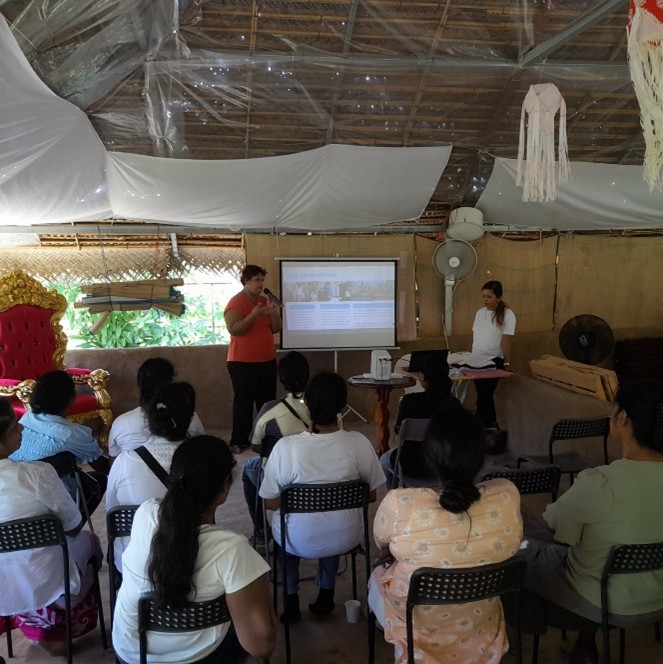
Manisha conducting a rights education session with the Sri Lanka community.
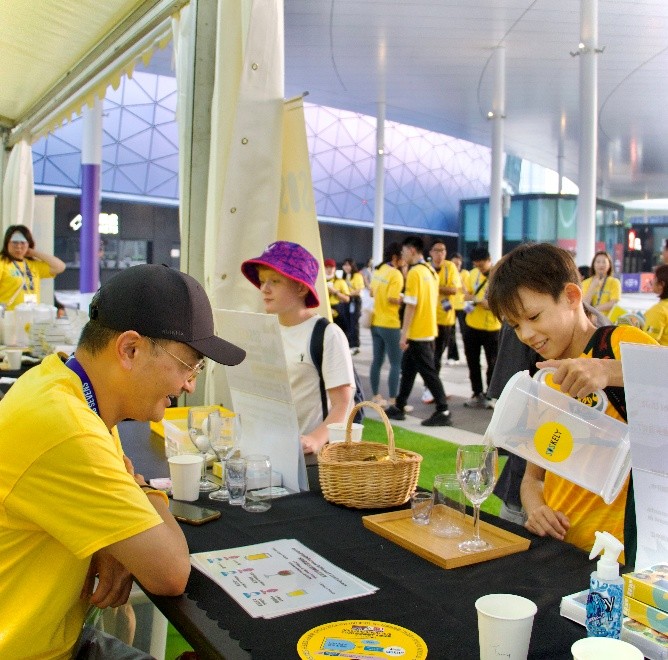
Louis at SOSKELY event.
Neither claims to have solved these problems. Manisha is still refining her approach to participatory design, still figuring out how to make partnerships work beyond personal connections. Louis is still learning what young people need, still experimenting with AI, still discovering what his next move should be.
That willingness — to ask, to act, to refuse easy conclusions — may be what connects them most.